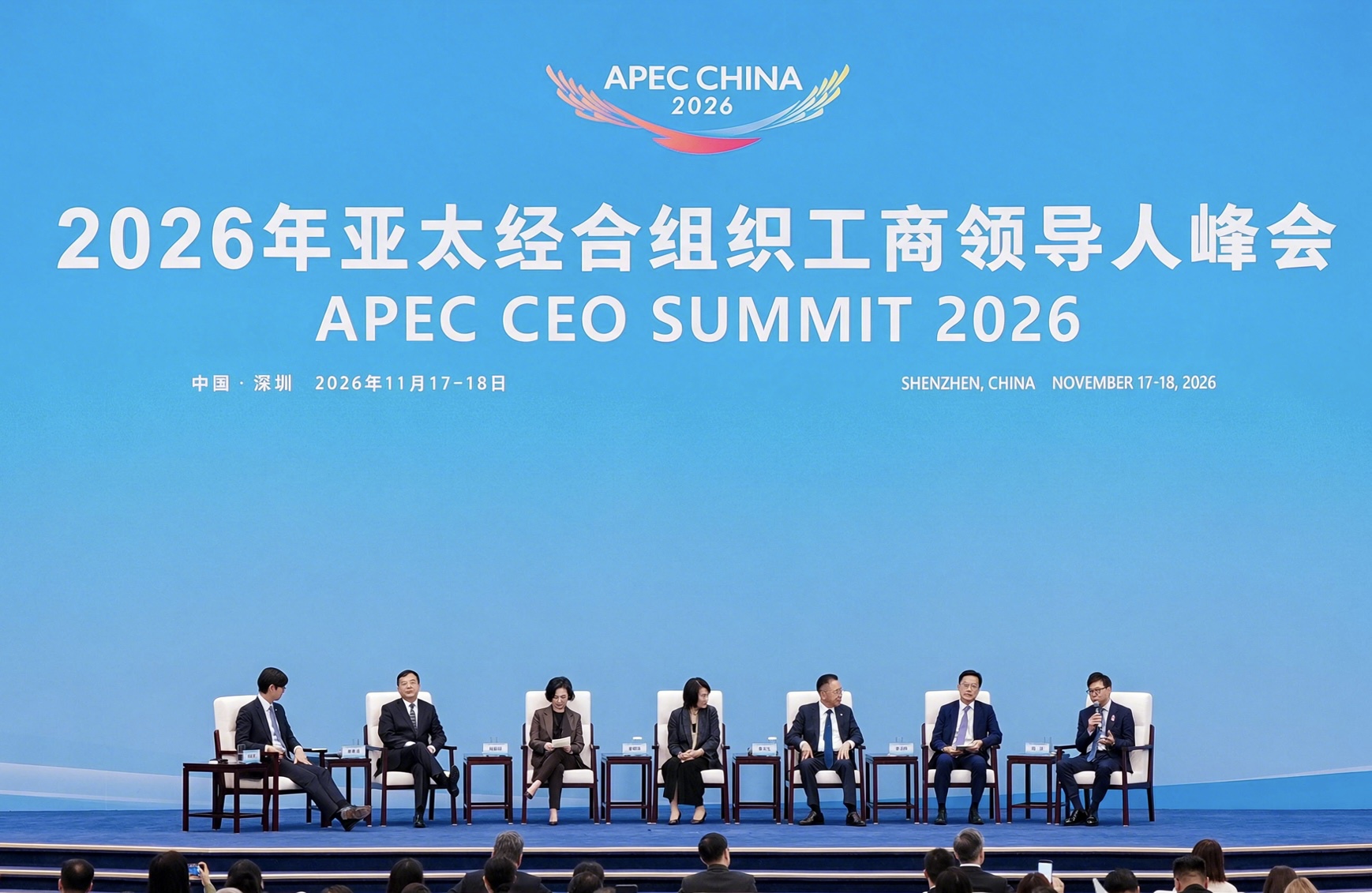
The Asia-Pacific Economic Cooperation (APEC) CEO Summit 2026 was held in Shenzhen on 17-18 November. Ms. Pansy Ho, Standing Committee Member of the National Committee of the Chinese People’s Political Consultative Conference, Vice Chairman of the All-China Federation of Industry and Commerce and Group Executive Chairman and Managing Director of Shun Tak Holdings Limited, was invited to attend. Under the summit theme “To Prosper and Win the Future Together,” she joined government officials and business leaders to discuss priorities for regional cooperation and chart a course for the Asia-Pacific’s development.
A key component of APEC Economic Leaders’ Week, the summit opened with a keynote address by President Xi Jinping. Ms. Ho took particular note of President Xi’s support for establishing a “World Bay Area Economic Cooperation Alliance.” She believes the alliance would provide an important platform for deeper cooperation between the Guangdong-Hong Kong-Macao Greater Bay Area (GBA) and leading bay areas around the world. During the summit, Ms. Ho was also invited to a welcome dinner, where she held in-depth discussions on cooperation with government and business representatives from Asia-Pacific economies. The discussions underscored for her the region’s shared commitment to solidarity, openness, and closer ties, reinforcing confidence within the business community that working together can deliver mutual benefits.
At the thematic discussion on “The Guangdong-Hong Kong-Macao Greater Bay Area and Asia-Pacific Development Opportunities,” Ms. Ho shared her views on regional collaboration and open cooperation. She proposed that Hong Kong bring destinations together through multi-destination travel and draw on the GBA spirit of “Openness, Inclusiveness, Pragmatism, and Adaptability” to evolve from a “Super Connector” into a “Super Value-Adder.” She also proposed developing the GBA into a “Real-World Testbed” for advancing economic integration across APEC, so that the GBA’s growth can help drive development across the Asia-Pacific.
Combining Hard and Soft Connectivity to Turn Institutional Differences into Advantages for Cooperation
Ms. Ho noted that the GBA is continuing to improve the conditions for the movement of people, capital, and other resources through “Hard Connectivity” in infrastructure and “Soft connectivity” in rules and institutional arrangements. Drawing on 30 years of practical experience in the GBA’s transportation sector, she observed that a “One-hour Living Circle” has taken shape in the region. The GBA’s distinctive institutional environment of “Three Customs Territories, Three Currencies and Three Legal Systems” has nurtured its unique regional spirit and can be turned into an efficient “Cooperation Interface” for the Asia-Pacific.
To facilitate access for overseas products, Guangdong, Hong Kong, and Macao have introduced more than 200 “GBA Standards.” Under a “One Examination, Multiple Certification” approach, a single test can be recognized across multiple jurisdictions, giving high-quality products from the Asia-Pacific one-stop access to a GBA market of more than 87 million people. In expanding overseas, companies such as EHang have drawn on the GBA’s advanced technology supply chains, Hong Kong’s international financing platform, and the city’s strengths as a “Super Connector” to bring innovative applications to APEC member economies such as Thailand and Japan.
Leveraging Hong Kong’s Role as a Hub and Using “Tourism+” to Connect Asia-Pacific Markets
Ms. Ho proposed that Hong Kong serve as a two-way hub, helping overseas businesses enter the vast Chinese Mainland market through the GBA while supporting the expansion of GBA services into APEC member economies. In tourism, she expressed the hope that a multi-destination approach would encourage two-way visitor travel between domestic and overseas markets and drive the upgrading of the entire tourism industry chain.
Looking ahead, the Group will actively seize the policy opportunities arising from the national 15th Five-Year Plan and, continuing to pursue its “Tourism+” development strategy, participate in building the World Bay Area Economic Cooperation Alliance. The Group will make full use of Hong Kong’s unique advantages of being rooted in the Motherland and connected to the world, continue to advance rules alignment, smooth flows of factors of production and industry collaboration, and strengthen engagement with international industry players, so that the GBA’s replicable and scalable practices can be turned into practical outcomes for Asia-Pacific cooperation. The Group is ready to work hand in hand with fellow business leaders, with steadfast confidence and resolve, to contribute the wisdom and strength of the Greater Bay Area to building an Asia-Pacific community and creating long-term prosperity for the region.